
 Save to Pinterest
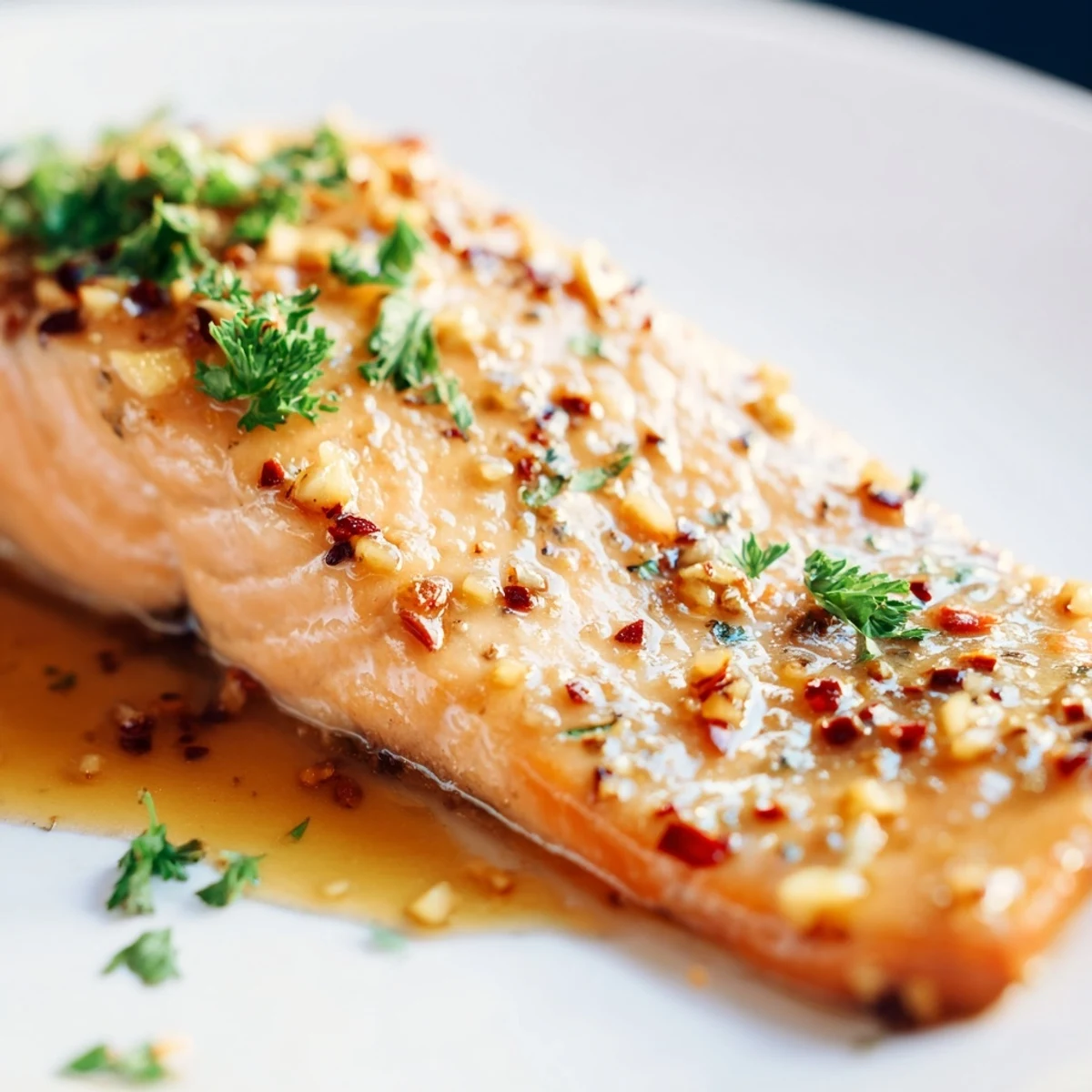
 Discover how to prepare tender salmon fillets baked to perfection and coated in a sweet, savory honey garlic glaze. This dish combines the natural richness of salmon with bright lemon juice and a hint of spice for a balanced flavor profile. Simple steps include seasoning, glazing halfway through baking, and garnishing with fresh parsley and lemon wedges. Ideal for a quick dinner with minimal prep and maximum taste.
There was an evening when a friend texted at five o'clock asking if I could pull together something impressive for dinner, and I opened my fridge to find salmon and honey. What started as a scramble became the easiest gourmet moment I've had in a kitchen, the kind of meal that made me realize you don't need complicated techniques to feed people something they actually want to eat.
I made this for my parents on a random Tuesday, and my mother kept asking what restaurant I'd gotten it from because she couldn't believe I'd made the glaze myself. That moment when someone assumes your food came from somewhere fancy is the one that convinced me this recipe was worth keeping.
Ingredients
- Salmon fillets, 6 ounces each: Look for fillets that feel firm and smell like the ocean, not fishy. Pat them completely dry before cooking so the glaze sticks instead of sliding off.
- Honey: Use the real stuff, not the squeeze bottle. It caramelizes differently and tastes like actual honey, not sweetness pretending to be honey.
- Soy sauce: Low-sodium lets you control the salt, and if anyone at your table needs gluten-free, grab tamari instead without making a whole thing about it.
- Fresh lemon juice: Bottled works in a pinch, but fresh brightens everything. One lemon usually gives you enough.
- Garlic cloves, minced: Mince them by hand if you have a minute. Garlic pressed in a machine tastes slightly different, and you'll notice it here.
- Dijon mustard: This is the secret that keeps the glaze from being pure sweetness. It adds depth that people taste but can't identify.
- Red pepper flakes: Optional, but if you like heat, a half teaspoon changes everything without overwhelming the sweetness.
- Olive oil and salt: Nothing fancy needed. Just enough oil to coat the salmon so it doesn't stick, and salt that you can taste on your fingers.
- Fresh parsley: This isn't decoration. It's the final note that makes people say the dish tastes bright.
Instructions
- Heat your oven and prep your stage:
- Set the oven to 400°F and line a baking sheet with parchment paper so nothing sticks and cleanup is painless. A hot oven means the salmon cooks gently inside while the glaze caramelizes on top.
- Dry and season the salmon:
- Pat each fillet with a paper towel until it's truly dry. Brush it with olive oil and season with salt and pepper, enough that you see it on the surface but nothing excessive.
- Build the glaze that does the work:
- Whisk honey, soy sauce, lemon juice, minced garlic, mustard, and red pepper flakes in a small bowl until it looks like it belongs on salmon. Taste it on your finger before you brush it on, so you know what you're creating.
- First pass in the oven:
- Brush half the glaze over each fillet, watching how it settles into the edges. Bake for exactly 10 minutes, not less, so the salmon starts cooking through.
- Return and finish:
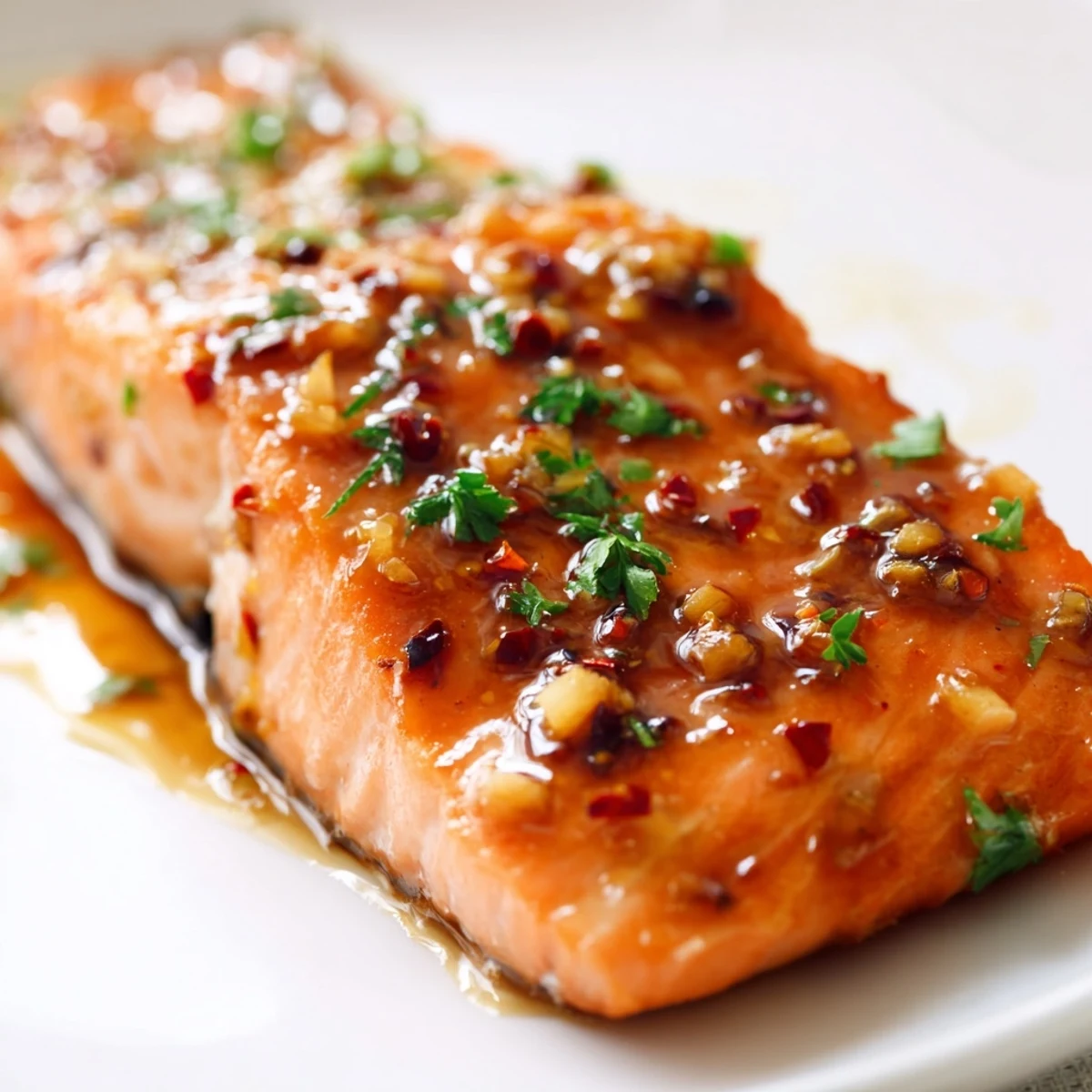
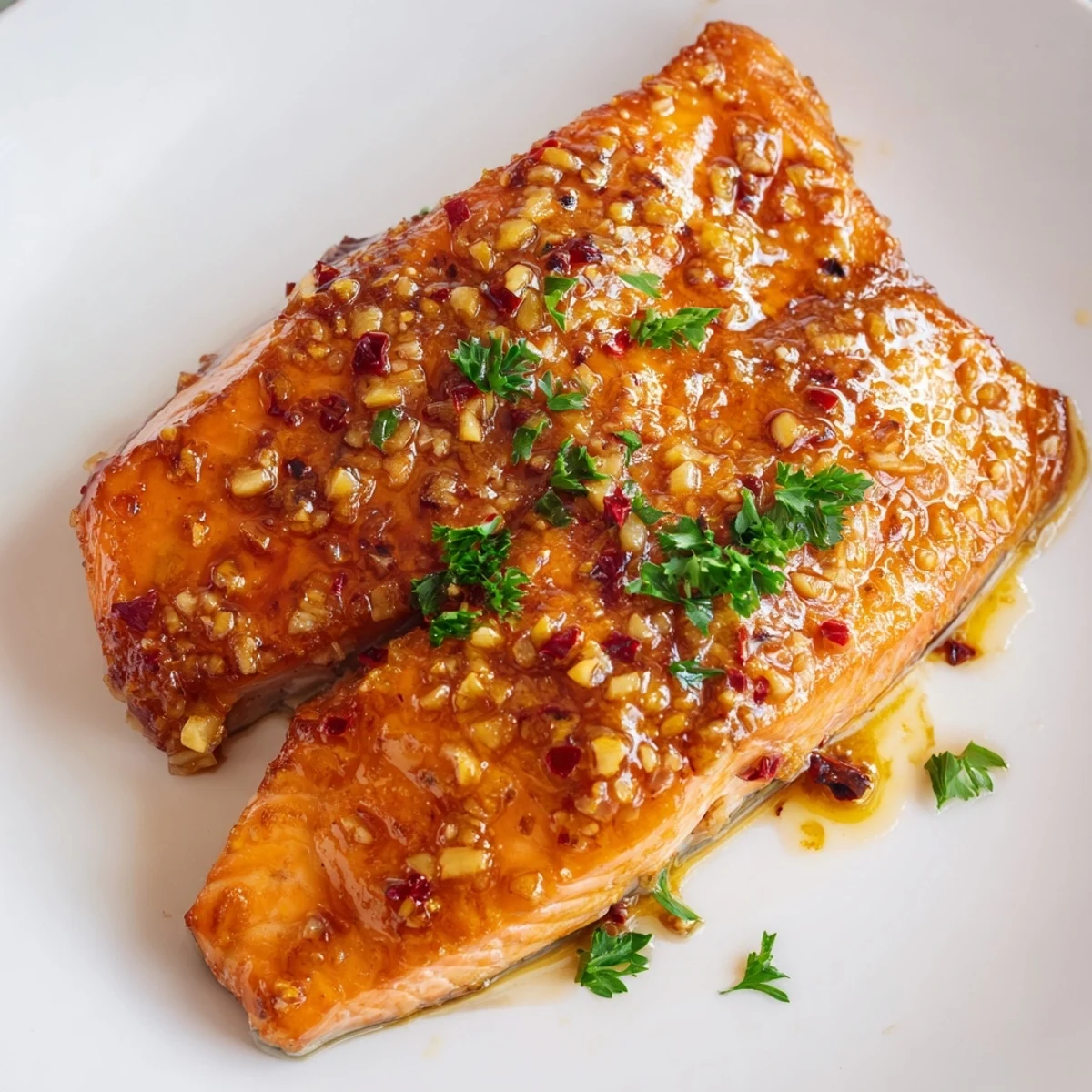
- Pull the salmon out, brush the remaining glaze over each fillet, and return it to the oven for another 3 to 5 minutes. The salmon is done when it flakes with the gentlest pressure of a fork and the glaze looks caramelized and sticky.
- Finish and serve:
- Scatter chopped parsley over the top and serve with lemon wedges so people can adjust the brightness at the table.
 Save to Pinterest
 There's something about watching someone take their first bite of something you made, the moment where they pause and their face tells you it worked. This dish creates that moment almost every time.
The Chemistry of This Glaze
Honey and garlic are a combination that sounds too simple until you watch them caramelize in an oven. The mustard doesn't announce itself as mustard, it just makes everything else taste more like itself. Lemon juice balances the sweetness so the dish doesn't feel cloying, and soy sauce adds a savory undertone that people can't quite place but absolutely want more of.
What to Serve Alongside
Rice soaks up the glaze that pools on the plate, turning simple rice into something memorable. Roasted vegetables like broccoli or asparagus feel natural next to the salmon, and their slight bitterness contrasts perfectly with the sweet and savory glaze. A fresh salad with lemon vinaigrette is also excellent if you want something lighter but still complete.
Variations and Adjustments
Maple syrup swaps in for honey if you want a deeper, woodsy flavor that leans less sweet. If you don't have fresh lemon juice, lime juice works and shifts the whole dish into a slightly different direction. Some nights I add a pinch of ginger to the glaze, just because I'm in the mood, and that small addition makes it feel new.
- Broil the salmon for the last 1 to 2 minutes if you want the top darker and slightly crispier.
- Double the glaze if you like it thick and sticky, or cut it in half if you prefer restraint.
- Make the glaze the morning before and let the flavors wake up together while it sits in the fridge.
 Save to Pinterest
 This dish has become my answer to the question of what to cook when you want something that feels special but doesn't require you to spend your whole evening in the kitchen. It's proof that simple ingredients and a little attention are sometimes all you need.
Recipe FAQs
- → How do I ensure the salmon stays moist when baking?
-
Brushing the fillets with olive oil and applying the honey garlic glaze halfway through baking helps maintain moisture and adds flavor.
- → Can I substitute the honey in the glaze?
-
Yes, maple syrup works well as a substitute for honey, offering a different but complementary sweetness.
- → Is it necessary to use fresh garlic for the glaze?
-
Fresh minced garlic provides the best flavor and aroma, enhancing the glaze's savory depth.
- → What side dishes pair well with this salmon?
-
Steamed rice, roasted vegetables, or fresh salads complement the salmon’s flavors nicely.
- → How can I make the top crispier?
-
Broiling the salmon for the last 1-2 minutes of cooking adds a crispy finish on top.