
 Save to Pinterest
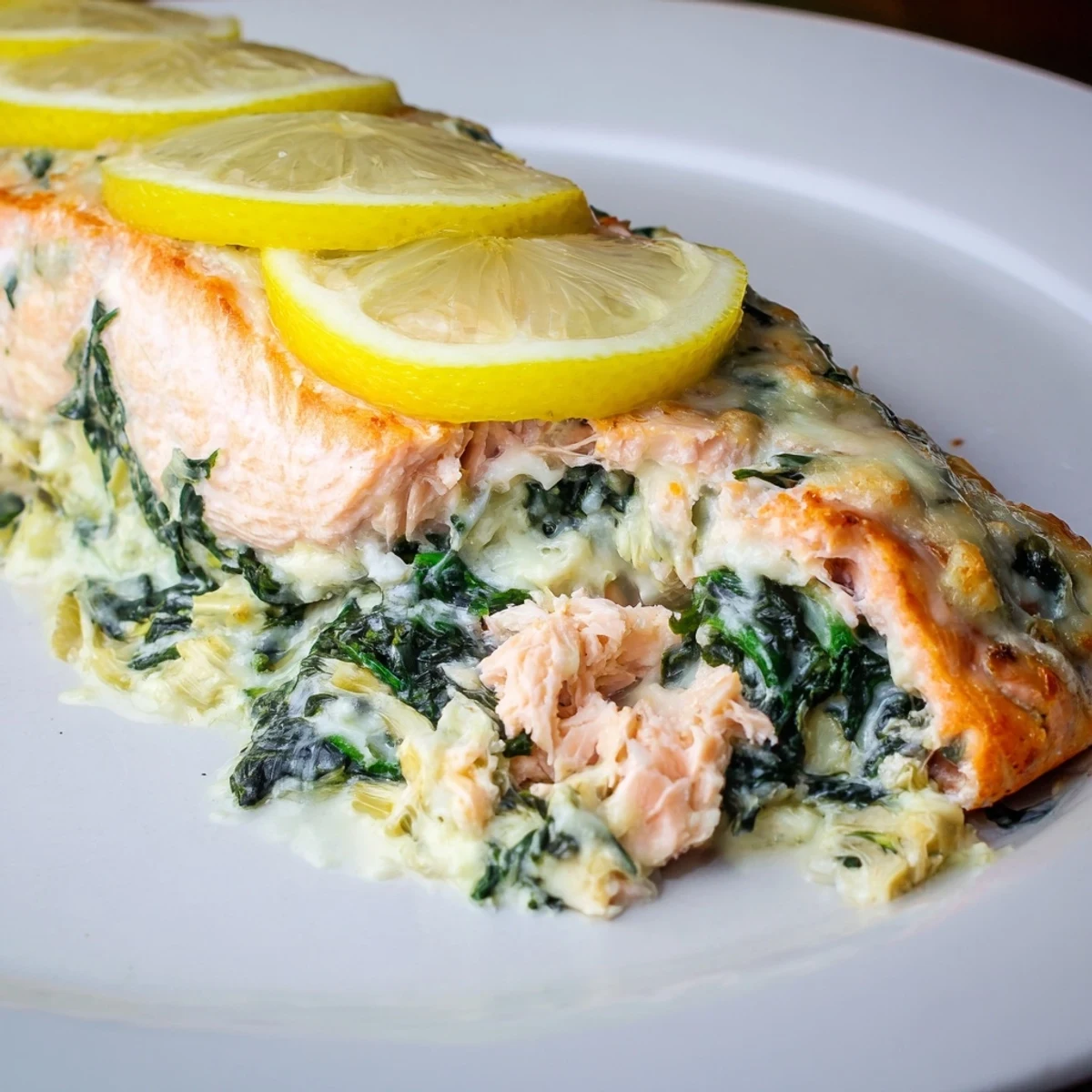
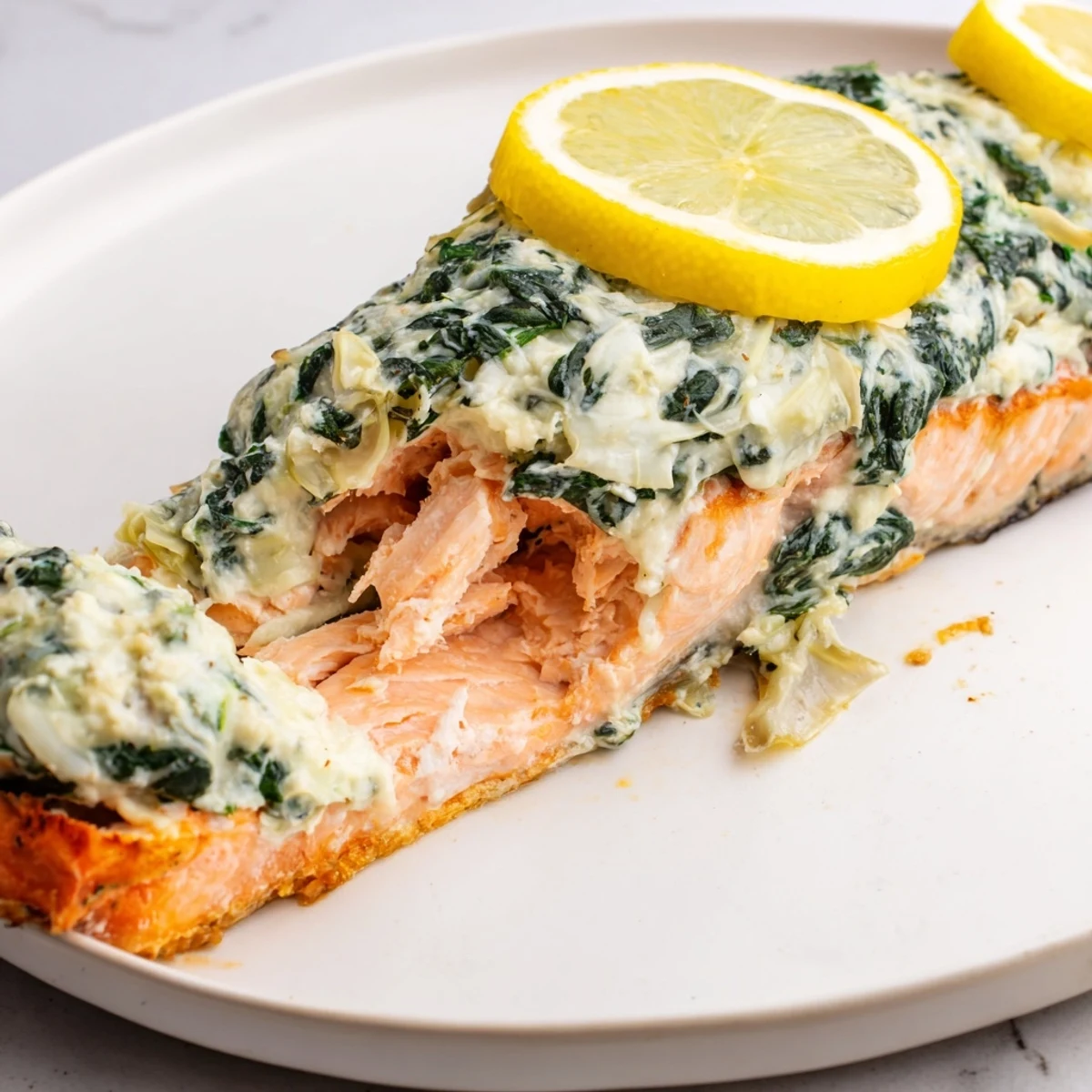
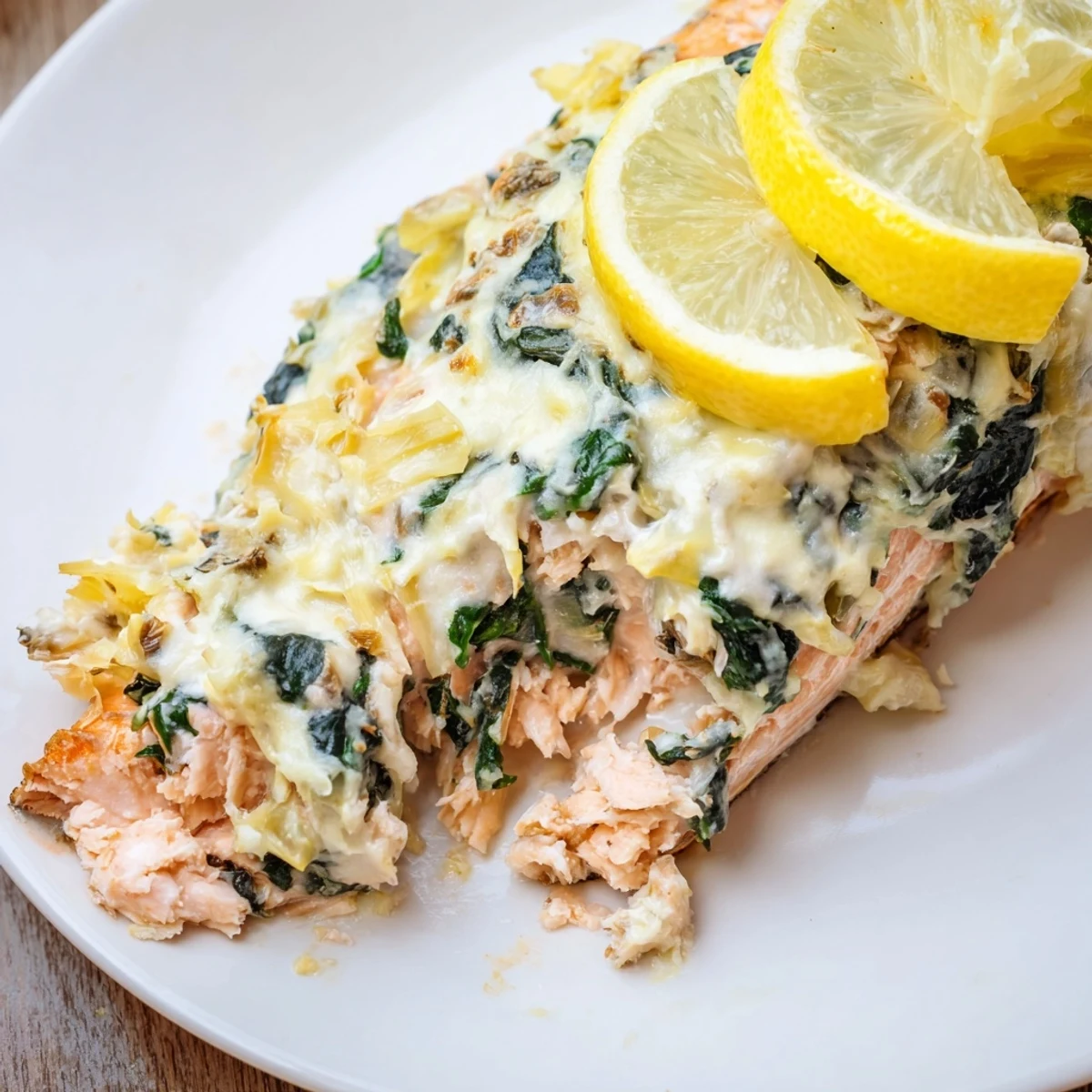
 This dish features tender salmon fillets filled with a creamy mixture of fresh spinach, artichoke hearts, cream cheese, and Parmesan. The stuffing is seasoned with garlic, sour cream, and spices for depth of flavor. The salmon is baked until perfectly cooked and flaky, served with a garnish of lemon slices to add a fresh, zesty finish. Ideal for a wholesome, satisfying main dish with a touch of indulgence.
The first time I watched someone butterfly a salmon fillet, I was convinced they were performing surgery. My friend Marco made it look effortless, his knife whispering through the flesh while I stood there holding a lemon like a prop I didn't know how to use. That afternoon in his cramped Brooklyn kitchen, the smell of garlic and artichokes warming in cream cheese convinced me that stuffed fish was worth every nervous moment.
I made this for my sister the night she told me she was pregnant, and we sat at my kitchen table picking at the lemon slices long after the fish was gone. She kept asking how I got the filling to stay put, and I admitted it took three failed attempts where the cream cheese oozed onto the baking sheet like a sad surrender. Now she requests it every birthday, and I never tell her about those disasters.
Ingredients
- Fresh spinach: Chop it coarse so it retains some texture rather than disappearing into green specks.
- Canned artichoke hearts: Drain them aggressively, squeezing out the briny liquid that would otherwise waterlog your stuffing.
- Cream cheese: It must be genuinely softened, not microwaved into a liquid state, or the filling loses its body.
- Grated Parmesan: The dusty kind from the green can works in a pinch, but a fresh wedge grated on a microplane adds nutty depth you cannot fake.
- Sour cream: This keeps the mixture from becoming too dense and heavy against the delicate fish.
- Garlic cloves: Mince them fine enough to distribute evenly, or someone bites into a harsh chunk.
- Salmon fillets: Ask for center-cut pieces of similar thickness so they cook at the same rate.
- Olive oil: A light brush helps the surface color without adding unnecessary richness.
- Lemon: The slices are not decorative, they release essential oils onto the hot fish that perfume the whole dish.
Instructions
- Make your oven ready:
- Set it to 200°C and line your baking sheet now, before your hands are covered in cream cheese and fish.
- Build the filling:
- Fold everything together in a bowl, tasting as you go because artichokes vary wildly in saltiness.
- Prepare the pockets:
- Press the salmon dry first, then cut with confidence, stopping before you slice through the bottom.
- Stuff with intention:
- Divide the mixture evenly, pressing it gently into each cavity without forcing it to burst.
- Season the surface:
- Brush the olive oil across the top and sprinkle salt from high above for even coverage.
- Bake until just done:
- Start checking at eighteen minutes, the fish should flake but still look slightly translucent in the center.
- Finish and serve:
- Tuck those lemon slices around the fillets while they are hot enough to release their oils.
 Save to Pinterest
 Last winter I brought this to a potluck where someone asked if I had considered opening a restaurant, and I laughed so hard I nearly dropped the empty dish. It was the same recipe I had ruined twice before getting right, the same one that once sent me to the store at nine PM because I forgot to buy artichokes.
What to Watch For
The salmon will tell you when it is ready by changing from translucent orange to opaque pink, but do not wait for it to become completely firm or you have crossed into dryness. I learned this by serving my mother a piece that required chewing, and she was too polite to mention it until I asked directly.
Making It Your Own
A handful of fresh dill folded into the stuffing makes this taste like something from a coastal town in Maine, while chopped sun-dried tomatoes push it toward Mediterranean territory. I have added crumbled feta when I was out of Parmesan, and the saltiness required reducing the added salt by half.
The Practical Details
Leftovers exist in a strange middle ground where the fish is still good but the filling has begun to separate slightly, so I recommend eating them cold on a salad rather than reheating. If you must warm them again, do so gently in a covered pan with a splash of water to create steam.
- Buy salmon from the display case rather than pre-packaged if possible, you can see the color and thickness.
- Save the artichoke marinade for salad dressing tomorrow, it is too flavorful to discard.
- Double the stuffing recipe and freeze half for the next time, it thaws quickly and saves ten minutes.
 Save to Pinterest
 However you serve it, this is a dish that rewards patience and a steady hand, the kind of meal that makes people slow down and actually talk across the table. That alone makes it worth the effort.
Recipe FAQs
- → How do you prepare the stuffing for the salmon?
-
Combine chopped spinach, artichoke hearts, cream cheese, Parmesan, sour cream, minced garlic, salt, pepper, and optional red pepper flakes. Mix until smooth and evenly blended.
- → What is the best way to cook the stuffed salmon?
-
After stuffing the salmon pockets, place them on a baking sheet, brush with olive oil, and season. Bake at 200°C (400°F) for 18-20 minutes until the fish flakes easily.
- → Can I add herbs to the stuffing?
-
Yes, fresh dill or parsley can be added to enhance the flavor of the stuffing nicely.
- → What sides pair well with this salmon dish?
-
Serve with roasted vegetables, rice, or a crisp green salad to complement the creamy filling and salmon's richness.
- → Is there a lighter alternative to sour cream in the filling?
-
Greek yogurt can be used as a lighter substitute for sour cream without sacrificing creaminess.