
 Save to Pinterest
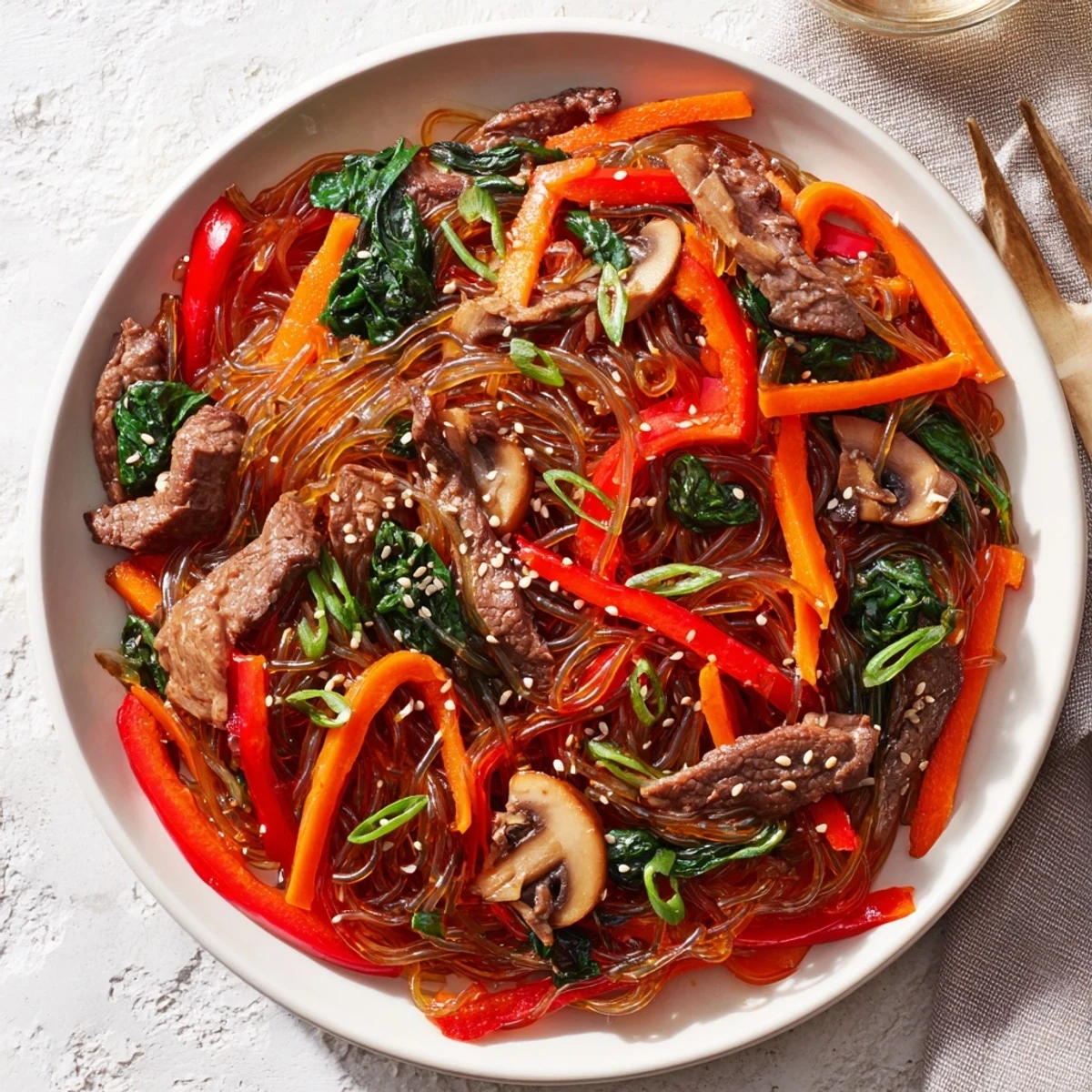
 Enjoy tender slices of flank steak stir-fried with Korean sweet potato glass noodles, crisp vegetables, and a rich umami sauce. This dish balances mild heat from gochujang with sweet notes of brown sugar and mirin. Perfect for busy weeknights, everything comes together in one skillet for easy cleanup.
The beef marinates briefly while you prep the vegetables and whisk together the simple sauce. Glass noodles (dangmyeon) provide that signature chewy texture, while spinach, bell peppers, and shiitake mushrooms add color and nutrients. Garnish with toasted sesame seeds and fresh scallions for an authentic finish.
The first time I made Korean beef noodles, I was trying to recreate a dish from a tiny restaurant in my neighborhood where the steam always fogged up their windows. My husband took one bite and actually stopped talking, which never happens, and asked if I could please make this every week forever.
Last winter, my sister came over exhausted from a brutal week at work, and I made a double batch. She sat at my counter, curled around the bowl, and told me it tasted like a hug from someone who actually knows how to cook, which I chose to take as a compliment.
Ingredients
- 400 g (14 oz) flank steak or sirloin, thinly sliced: Partially freezing the beef for 20 minutes makes it so much easier to slice thin against the grain
- 1 tbsp soy sauce, 1 tbsp cornstarch, 1 tsp sesame oil: This simple marinade transforms the beef into something meltingly tender
- 300 g (10 oz) Korean sweet potato glass noodles (dangmyeon): These chewy, springy noodles are absolutely worth seeking out at an Asian market
- 2 tbsp vegetable oil: Divide this between cooking the beef and vegetables
- 1 medium carrot, julienned: The sweetness balances the savory elements beautifully
- 1 red bell pepper, thinly sliced: Adds both gorgeous color and a fresh crunch
- 1 cup shiitake mushrooms, sliced: Earthy and meaty, they soak up all that sauce
- 3 scallions, sliced: Use both white and green parts for different layers of flavor
- 2 cups baby spinach: It wilts down into the hot noodles and adds gorgeous color
- 4 tbsp soy sauce: The salty backbone of the whole dish
- 2 tbsp brown sugar: Caramelizes slightly and mellows the heat
- 1 tbsp gochujang: Korean chili paste brings depth and gentle warmth
- 2 tbsp mirin or rice wine: Adds sweetness and a subtle fermented complexity
- 2 tsp sesame oil: That nutty finish that makes everything taste complete
- 2 cloves garlic, minced: Fresh garlic is non negotiable here
- 1 tsp freshly grated ginger: Grate it right into the sauce bowl
- 1 tbsp toasted sesame seeds and extra scallions: The garnish that makes it look like you tried way harder than you did
Instructions
- Prep the beef:
- Toss the sliced beef with soy sauce, cornstarch, and sesame oil in a bowl, then let it hang out while you get everything else ready. This little step makes such a difference in texture.
- Cook the noodles:
- Boil them according to the package, drain well, and rinse under cold water to stop the cooking and keep them from clumping together.
- Whisk up the sauce:
- Combine all the sauce ingredients in a small bowl, stirring until the sugar dissolves completely and everything is silky smooth.
- Sear the beef:
- Heat half the oil in a large skillet or wok over medium high heat, then add the beef in a single layer and stir fry for just 2 to 3 minutes until barely cooked through. Do not crowd the pan or it will steam instead of sear.
- Cook the vegetables:
- Add the remaining oil to the skillet and stir fry the carrots, bell pepper, and mushrooms for 3 to 4 minutes until they are tender but still have some bite.
- Bring it all together:
- Return the beef to the pan, then add the noodles, spinach, and sauce, tossing everything for 2 to 3 minutes until the sauce coats each strand and the spinach wilts beautifully.
- Finish and serve:
- Serve immediately in bowls, sprinkled generously with sesame seeds and those extra scallions you sliced earlier.
 Save to Pinterest
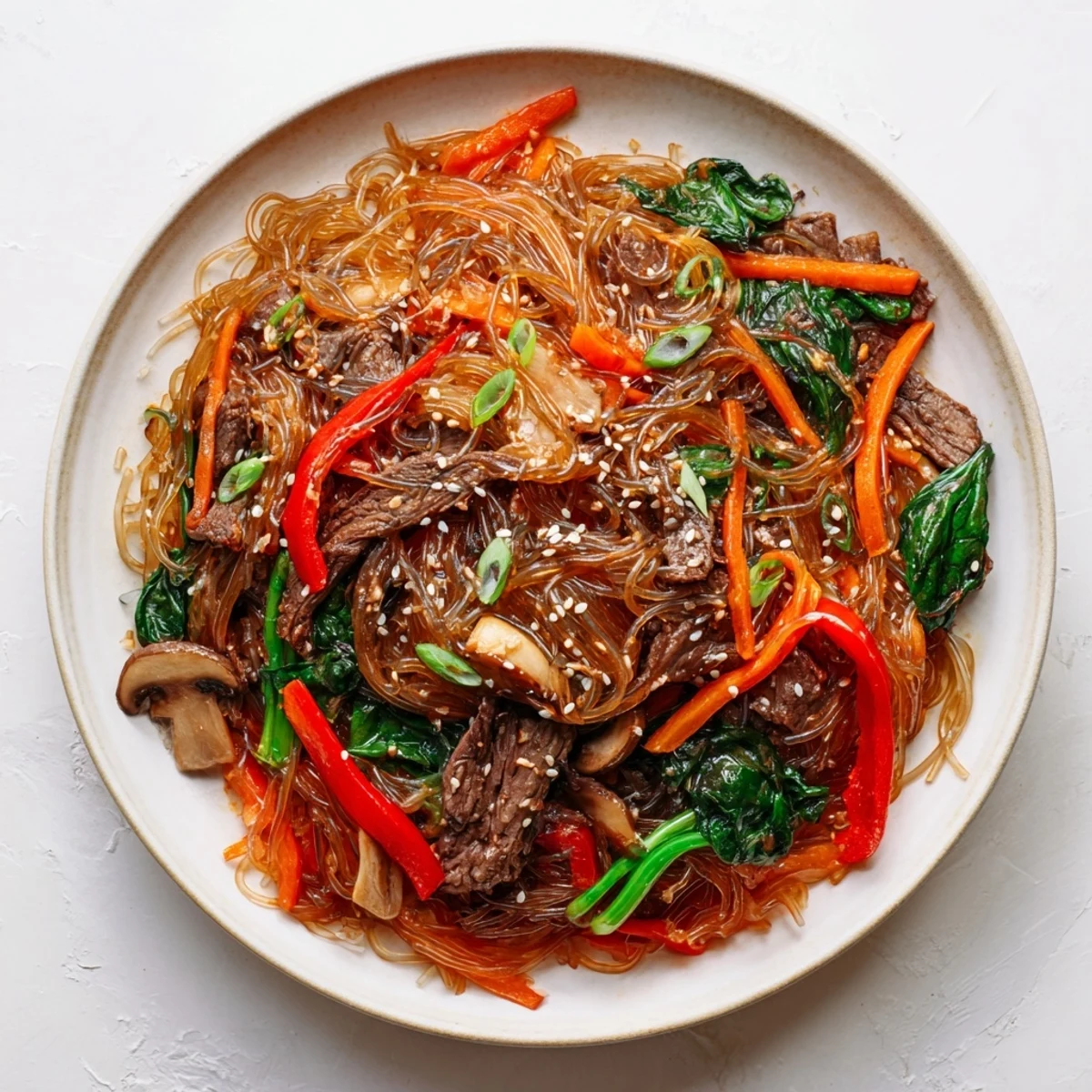
 This recipe has become my go to for nights when I want something that feels special but does not require three hours of focused effort. Last week, my neighbor caught the smell through our shared wall and knocked on my door with an empty Tupperware container and a very hopeful expression.
Getting The Noodles Right
Glass noodles can be tricky because they go from perfectly chewy to mushy in seconds. I set a timer as soon as they hit the water, and the moment it beeps, I drain and rinse them under cold water immediately.
Making It Your Own
Sometimes I add shredded cabbage or snap peas if they are in my crisper drawer, and once I used udon noodles when I could not find glass noodles and it was still fantastic. The sauce works with almost any vegetable or noodle you have on hand.
Perfecting The Balance
Start with less gochujang than you think you need, then taste and add more at the end. The flavors concentrate as it sits, so what seems mild initially can become quite spicy after a few minutes.
- Taste the sauce before adding it to the pan and adjust the sugar or soy sauce if needed
- If the sauce seems too thick, splash in a little water or extra mirin
- Leftovers actually taste better the next day as the flavors meld
 Save to Pinterest
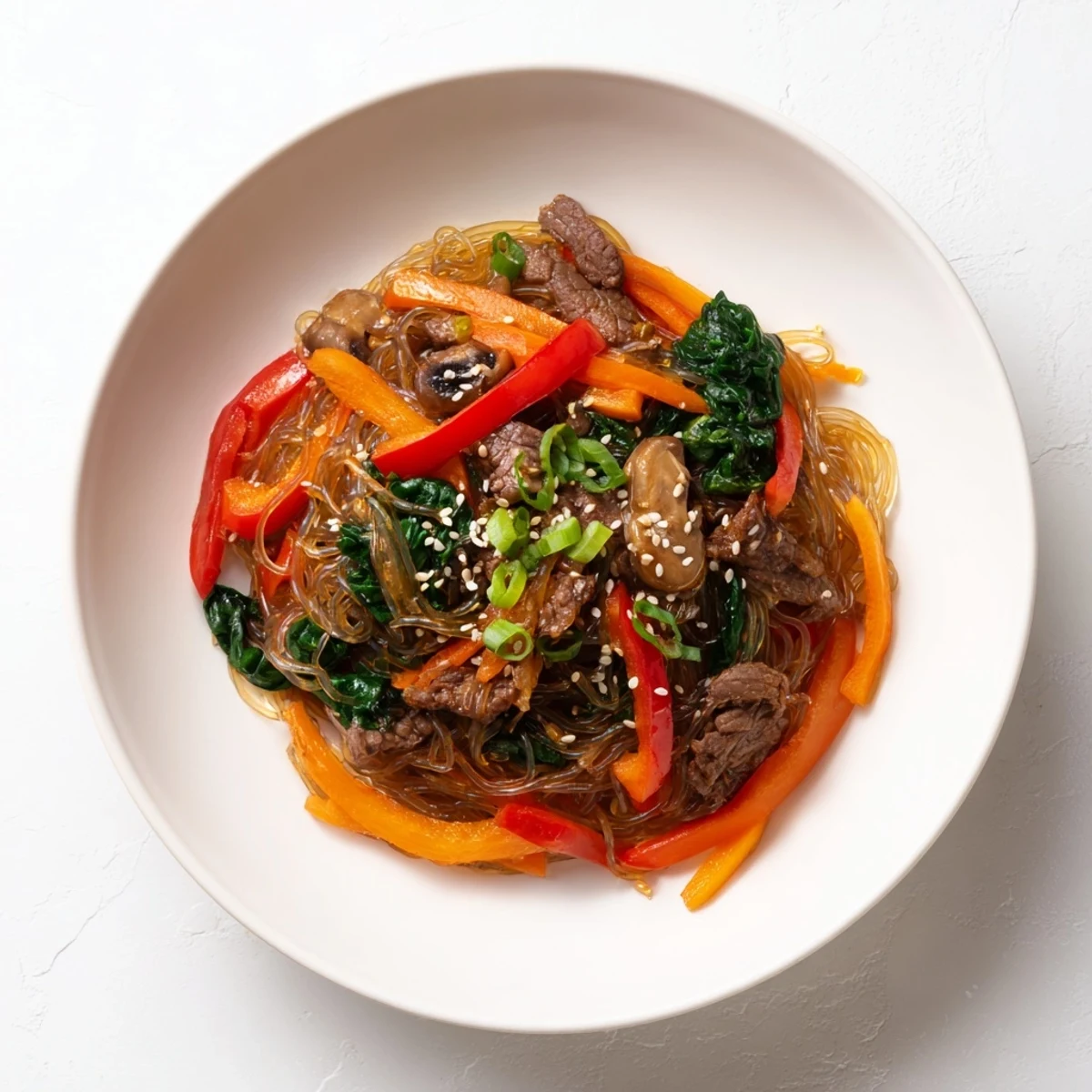
 I hope this becomes one of those recipes you can make without even thinking, the one you turn to when you need something warm and satisfying and just a little bit spicy.
Recipe FAQs
- → What type of noodles work best?
-
Korean sweet potato glass noodles (dangmyeon) are traditional and provide the perfect chewy texture. Rice noodles make a great gluten-free substitute. Avoid Italian pasta as it won't give you the right texture or flavor profile.
- → How spicy is this dish?
-
The gochujang provides mild to medium heat depending on your sensitivity. It's more about depth of flavor than overwhelming spice. Add extra chili paste or red pepper flakes if you prefer more kick.
- → Can I prepare this ahead?
-
You can slice the beef and vegetables, plus whisk the sauce up to a day ahead. Store everything separately in the refrigerator. Cook just before serving for the best texture, as noodles may become soft if reheated.
- → What can I substitute for gochujang?
-
Mix equal parts miso paste with sriracha or chili garlic paste as a quick substitute. For a non-spicy version, use additional soy sauce and a touch of tomato paste for color and depth.
- → How do I store leftovers?
-
Keep in an airtight container in the refrigerator for up to 3 days. Reheat gently in a skillet with a splash of water to prevent sticking. The noodles may absorb more sauce over time, so add a little extra soy sauce when reheating if needed.
- → What protein alternatives work well?
-
Thinly sliced chicken breast, pork tenderloin, or firm tofu all work beautifully. Adjust cooking times slightly—chicken and pork need about 4-5 minutes, while tofu only needs 2-3 minutes to brown and heat through.