
 Save to Pinterest
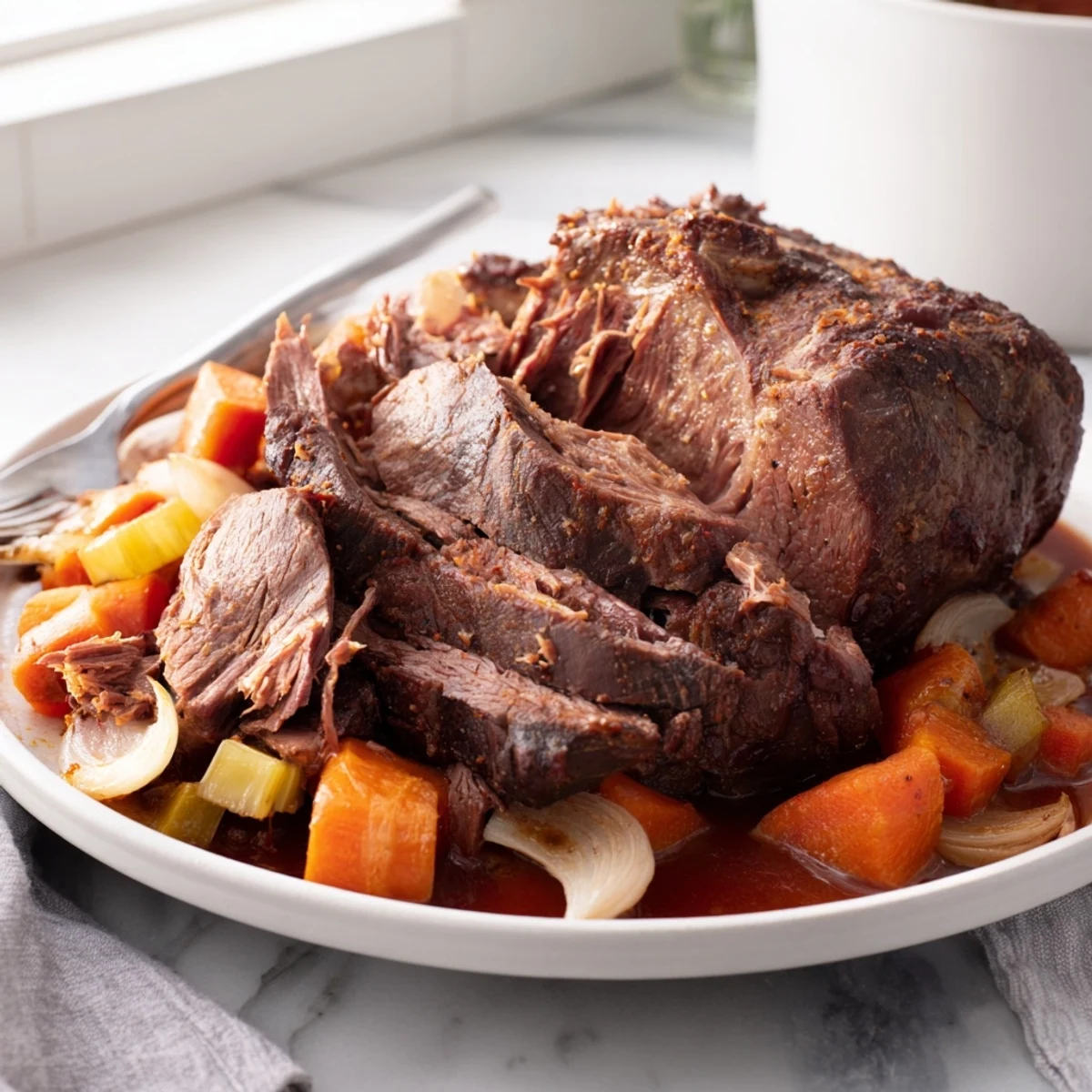
 This classic American pot roast features a generously seasoned beef chuck seared to a deep golden crust, then slow-braised for three hours in a flavorful combination of red wine, beef broth, and tomato paste.
Hearty chunks of carrots, celery, and onion melt alongside the meat, absorbing every bit of the rich, herb-infused cooking liquid.
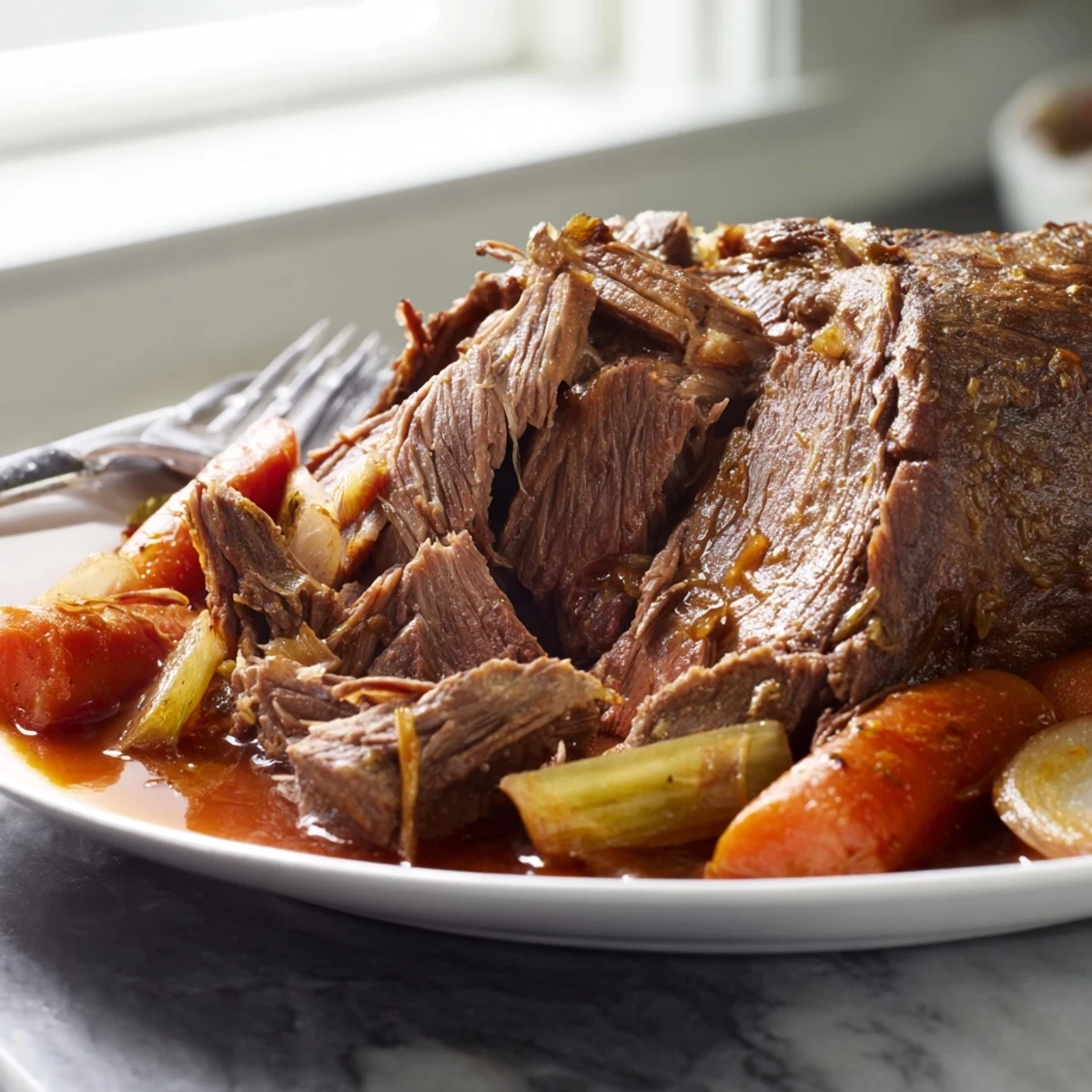
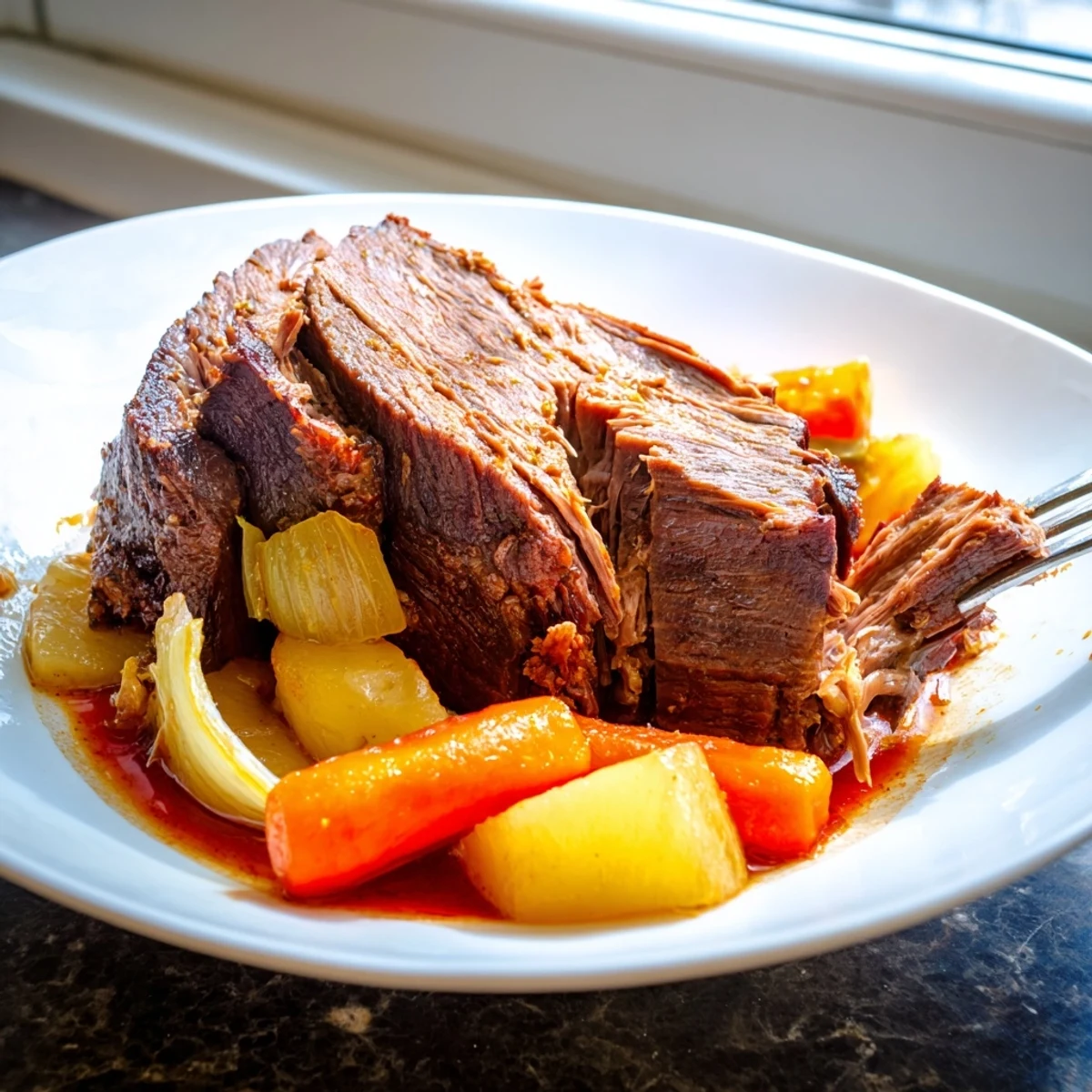
The result is fork-tender beef that practically shreds itself, surrounded by meltingly soft vegetables and silky pan juices that make the perfect natural gravy.
Serve it family-style straight from the Dutch oven with crusty bread or creamy mashed potatoes to soak up every last drop of that savory sauce.
The kitchen always smells different on a Sunday when a pot roast is in the oven, a deep savory warmth that seeps under every door in the house. My neighbor actually knocked once asking what I was cooking because the aroma had drifted through our shared hallway. There is something almost magical about transforming a tough cut of chuck into something that falls apart with just a fork and a little patience.
I once made this for my cousin who swore she hated pot roast, the kind of declaration that makes you want to prove someone wrong. She went back for seconds and then quietly asked for the recipe before leaving, which is honestly the highest compliment a home cook can receive.
Ingredients
- 1 (3 to 4 lb) beef chuck roast: Chuck is the ideal cut because its marbling breaks down during the long braise into pure tenderness.
- 3 large carrots, peeled and cut into large pieces: Cutting them chunky keeps them from turning mushy over the long cook.
- 3 celery stalks, cut into chunks: These form the aromatic backbone of the broth alongside the onions.
- 1 large yellow onion, quartered: Leave the quarters fairly large so they hold their shape and sweeten in the braise.
- 3 to 4 cloves garlic, smashed: Smashing rather than mincing gives a mellow sweetness that infuses the whole pot.
- 2 cups beef broth: Use a good quality brand you would actually drink on its own.
- 1 cup dry red wine (optional): A Cabernet or Merlot adds depth, but extra broth works fine if you prefer to skip it.
- 2 tablespoons tomato paste: This small amount thickens the sauce and adds a subtle umami richness.
- 2 teaspoons kosher salt: Seasoning the meat generously before searing builds flavor from the very first step.
- 1 teaspoon freshly ground black pepper: Freshly cracked makes a noticeable difference compared to pre ground.
- 1 teaspoon dried thyme: Thyme and beef are a classic pairing that never disappoints.
- 2 sprigs fresh rosemary: Whole sprigs are easy to fish out before serving.
- 2 bay leaves: Do not forget to remove these before serving as they stay tough no matter how long they cook.
- 2 tablespoons olive oil: Just enough to get a hard sear on the meat without burning.
Instructions
- Get the oven ready:
- Preheat your oven to 300 degrees F and make sure the rack is positioned in the lower third so your Dutch oven fits comfortably.
- Season and sear the roast:
- Pat the chuck dry with paper towels, then rub it all over with salt and pepper. Heat olive oil in your Dutch oven over medium high heat until it shimmers, then lay the roast in and do not move it for about four minutes per side until you get a deep brown crust.
- Build the vegetable base:
- Transfer the roast to a plate and add the onions, carrots, and celery to the same pot. Let them cook undisturbed for a few minutes until they pick up some color, then stir in the garlic and tomato paste for about a minute until fragrant.
- Deglaze with wine:
- Pour in the red wine and use a wooden spoon to scrape up every browned bit stuck to the bottom, because that fond is concentrated flavor. Let it bubble for two to three minutes so the alcohol cooks off.
- Braise low and slow:
- Nestle the roast back into the pot, pour in the broth, and tuck in the thyme, rosemary, and bay leaves. Bring it to a gentle simmer on the stovetop, then cover tightly and slide the whole pot into the oven for three hours.
- Rest and serve:
- Remove the pot from the oven and carefully transfer the roast to a cutting board. Discard the bay leaves and herb stems, then slice or shred the beef and serve it with the vegetables and ladles of the pan juices.
 Save to Pinterest
 The best pot roast I ever made was the one I almost ruined, when I got distracted by a phone call and left the sear going a minute too long. Those nearly blackened edges ended up giving the broth an incredible depth I have never quite replicated on purpose.
Leftovers Worth Fighting Over
Shredded pot roast piled onto a crusty roll with a spoonful of the reduced pan juices makes a sandwich that rivals anything from a deli counter. You can also fold the leftover meat and vegetables into a hearty soup later in the week, stretching one roast into two completely different meals.
Choosing the Right Cut
Chuck roast is the gold standard here because it has the right balance of fat and connective tissue that melts during a long braise. Round roast looks similar but leans too dry, and brisket works but gives a different texture, so stick with chuck for that classic fall apart result.
What to Serve Alongside
Mashed potatoes are the obvious choice and for good reason, because they act as a vehicle for every drop of that braising liquid. A simple green salad with a sharp vinaigrette cuts through the richness nicely.
- Toasted crusty bread is nonnegotiable for soaking up the juices.
- Creamy polenta works as an elegant alternative to mashed potatoes.
- A glass of the same red wine you cooked with ties everything together beautifully.
 Save to Pinterest
 A pot roast is really just an exercise in patience rewarded, and there is something deeply satisfying about pulling a steaming, fragrant pot from the oven knowing dinner took care of itself. Share it with someone you love and watch the table go quiet.
Recipe FAQs
- → What cut of beef works best for pot roast?
-
Beef chuck roast is the ideal choice because its generous marbling and connective tissue break down during the long braise, creating incredibly tender, flavorful meat. Chuck shoulder or arm roast are also excellent alternatives.
- → Can I make pot roast without red wine?
-
Absolutely. Simply replace the wine with an equal amount of additional beef broth. The tomato paste and herbs will still provide plenty of depth and complexity to the braising liquid.
- → Why is my pot roast tough instead of tender?
-
Toughness usually means the roast needs more cooking time. Collagen in chuck roast breaks down slowly, and the meat becomes tender only after extended braising. Make sure your oven temperature is low and steady at 300°F, and give it the full three hours or even longer if needed.
- → Should I sear the roast before braising?
-
Yes, searing is a crucial step. Browning the meat on all sides creates a flavorful crust through the Maillard reaction and adds deep, caramelized notes to the finished dish. Don't skip this step or rush it.
- → Can I add potatoes to the pot roast?
-
Definitely. Yukon Gold or red potatoes cut into large chunks can be added alongside the other vegetables. Add them at the same time as the carrots and celery so they have time to absorb the braising flavors while maintaining their texture.
- → How should I store and reheat leftovers?
-
Store leftover pot roast with its juices in an airtight container in the refrigerator for up to four days. Reheat gently in a covered pot over low heat on the stovetop, adding a splash of broth if needed. The flavors actually improve the next day.