
 Save to Pinterest
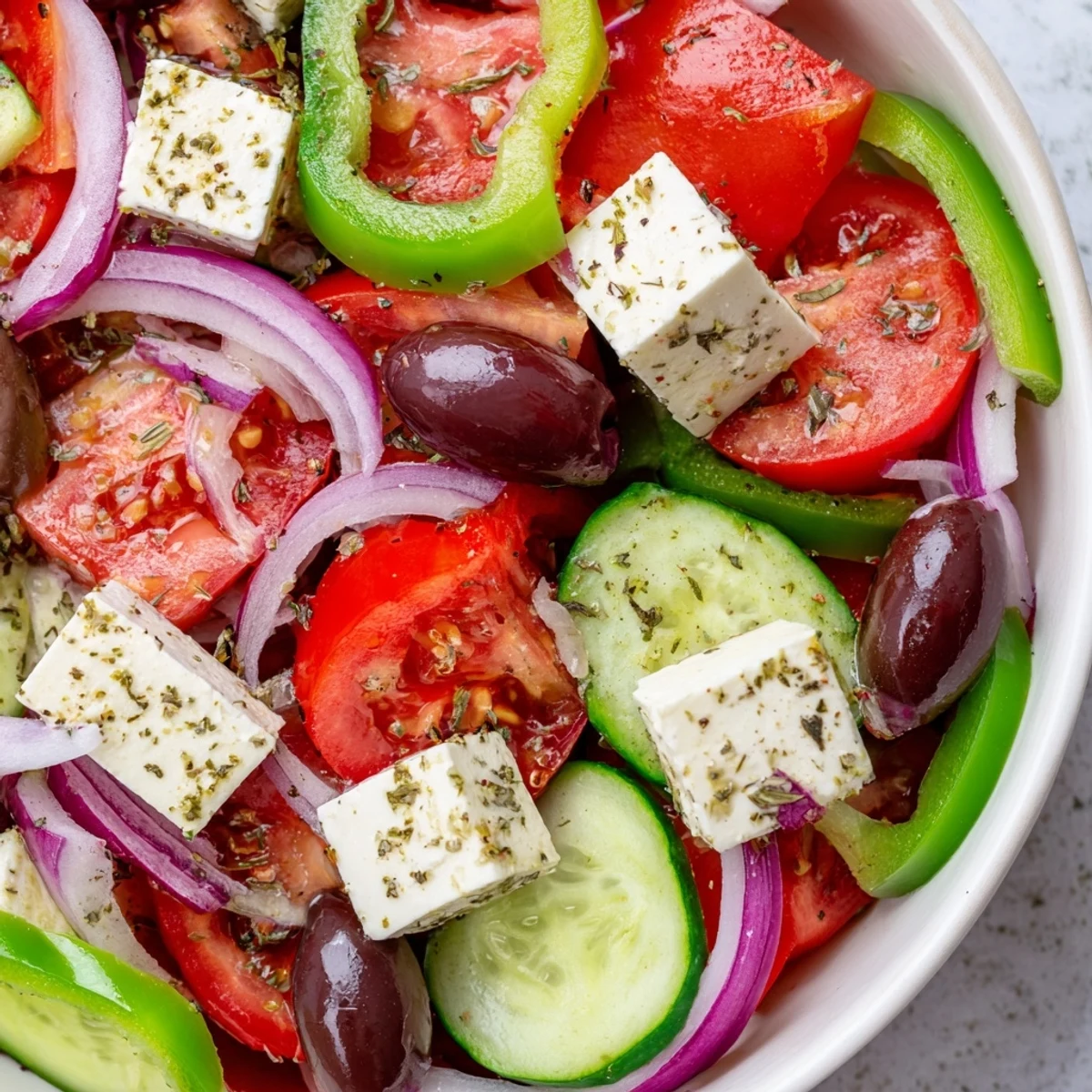
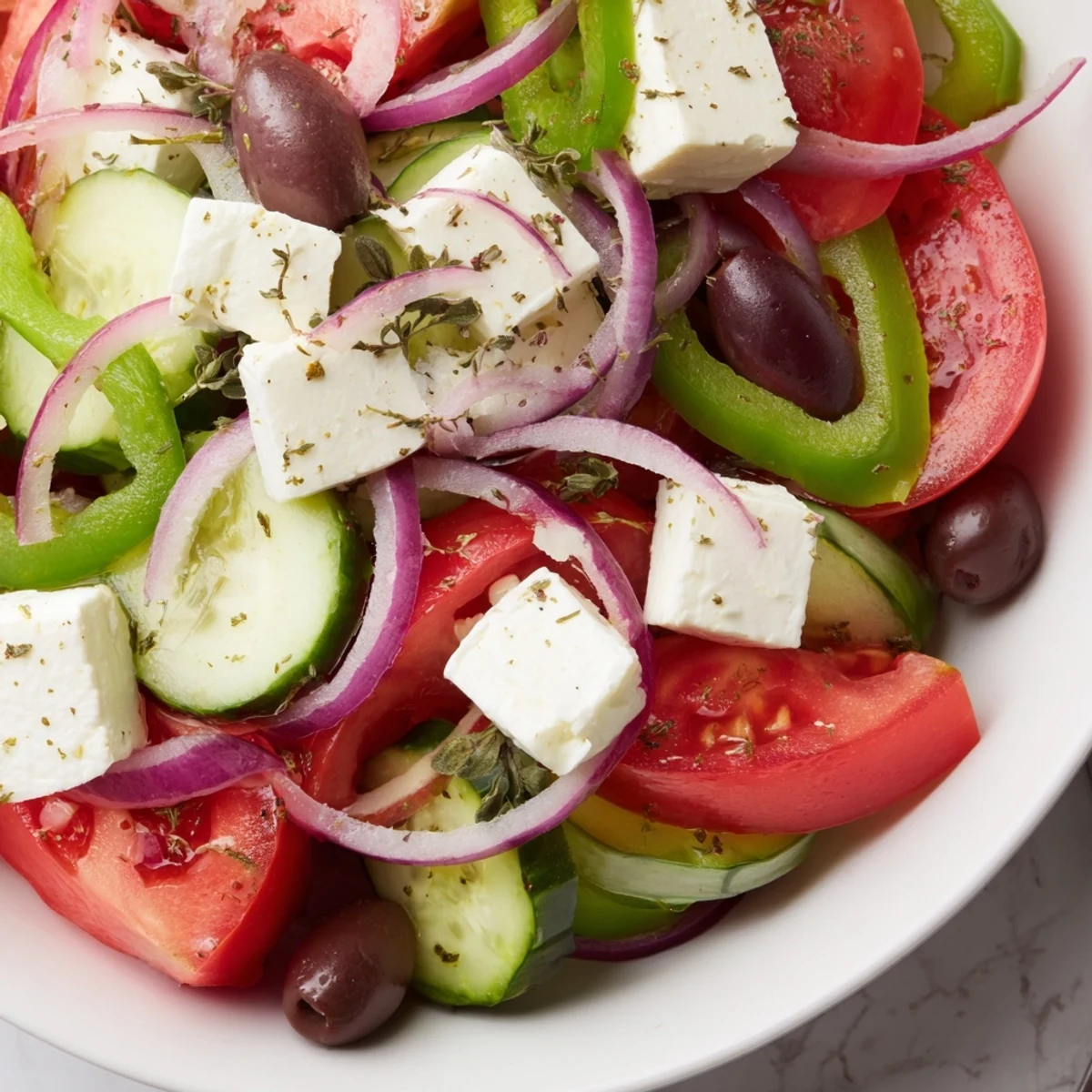
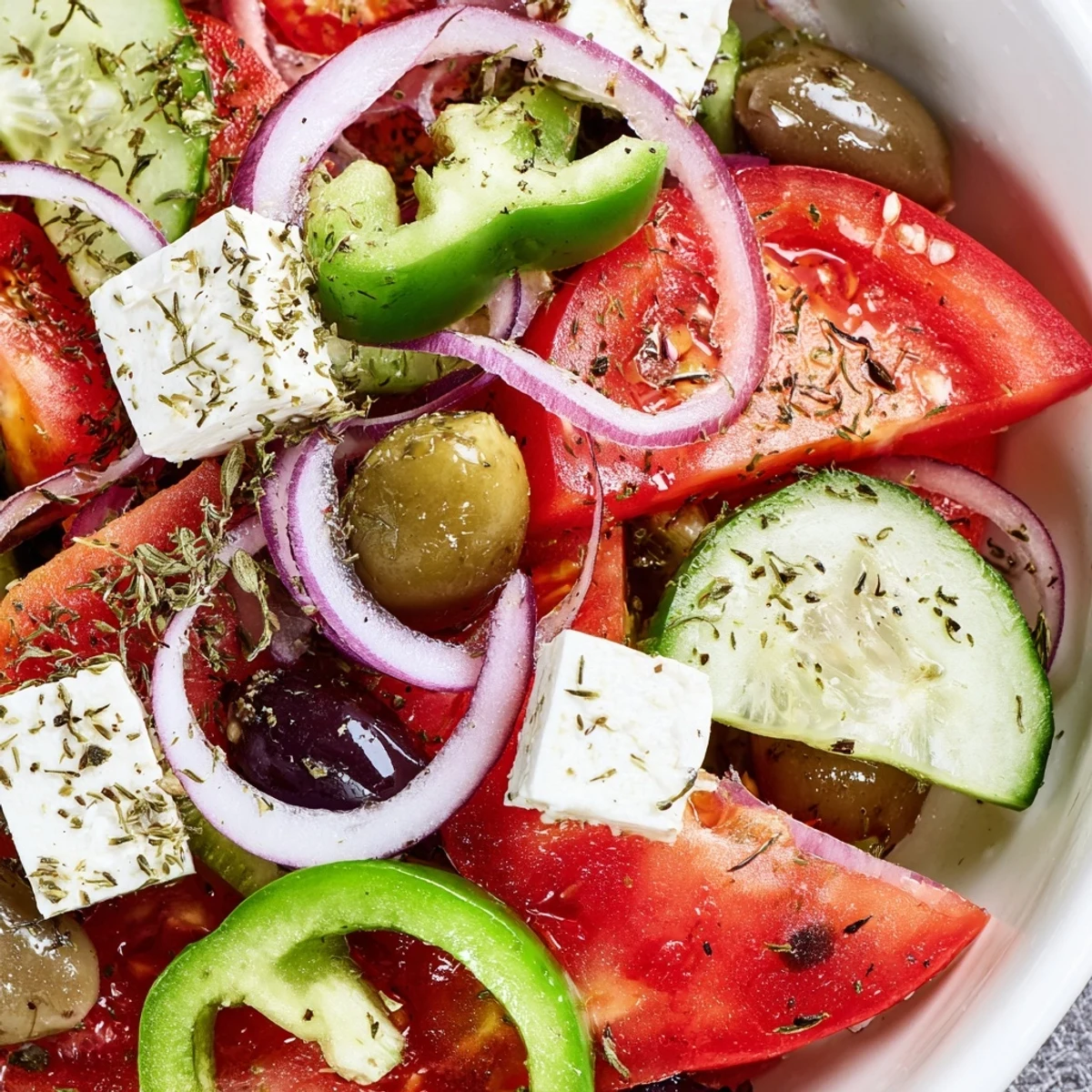
 This vibrant Greek salad combines ripe tomatoes, crisp cucumber, red onion, and green pepper with briny Kalamata olives and creamy feta cheese. A simple dressing of extra virgin olive oil, red wine vinegar, dried oregano, salt, and pepper brings fresh, tangy flavor. Toss all together and garnish with fresh oregano for a light, refreshing dish with a perfect balance of textures and Mediterranean flair.
There's something about standing at the kitchen counter with tomatoes still warm from the sun that makes you forget about fancy recipes. The first time I truly understood Greek salad wasn't from a cookbook—it was at a tiny taverna in Athens where an older woman tossed together handfuls of vegetables like she was painting something she'd made a thousand times before. She didn't measure, didn't fuss, and what arrived at the table tasted like the Mediterranean itself.
I made this salad for my sister the summer she decided to stop cooking from boxes, and watching her eyes widen at how simple ingredients could taste so alive reminded me why I keep coming back to it. She's been making her own version ever since, usually while telling me about whatever drama is happening in her life—the salad somehow makes those conversations feel easier.
Ingredients
- Ripe tomatoes: Choose ones that smell sweet and yield slightly to pressure—they're the foundation of everything that follows, and mealy tomatoes will let you down.
- Cucumber: A crisp, cold cucumber adds textural contrast that keeps each bite interesting.
- Red onion: Sliced thin, it brings a clean sharpness that balances the richness of the cheese.
- Green bell pepper: Adds a subtle sweetness and crunch that rounds out the flavor profile.
- Feta cheese: The creamy, tangy anchor that makes this salad feel substantial and special.
- Kalamata olives: Their deep, slightly fruity bitterness is non-negotiable—don't skip them or substitute with milder olives.
- Extra virgin olive oil: Use the good kind you'd actually taste on bread, because this is one of only a few ingredients and it shows.
- Red wine vinegar: Sharp enough to wake up your palate without overpowering the vegetables.
- Dried oregano: The signature note that whispers Mediterranean with every bite.
Instructions
- Start with the vegetables:
- Arrange your tomatoes, cucumbers, onion, and bell pepper in a large bowl as you cut them. There's no need to prep everything in advance and let them sit—fresh vegetables taste brightest when they're assembled close to eating.
- Add the olives and cheese:
- Scatter the Kalamata olives across the vegetables, then crumble or cube the feta over the top. At this point, resist the urge to toss everything together—let each element show itself on the plate.
- Make the dressing:
- In a small bowl, whisk the olive oil and red wine vinegar together with the dried oregano, salt, and pepper. Taste it on a small piece of tomato before committing it to the whole salad, because this is where you control whether the final dish sings or falls flat.
- Bring it all together:
- Drizzle the dressing over the salad with a gentle hand, tossing everything just enough to coat. The goal is to marry the flavors without breaking down the vegetables into mush.
 Save to Pinterest
 I learned to make this salad properly during a season when everything felt complicated, and I realized that some of the best things in life don't require fussing. This salad became my metaphor for that—honest, straightforward, and better for not being overthought.
When to Serve This
This salad shines at summer lunches, packed beach days, and table spreads where you want something that feels light but satisfying. It's also the answer when you're cooking for someone and want to prove that vegetarian food doesn't need to apologize for anything. The formula works in spring too, though you might miss the peak tomato sweetness of summer.
Making It Your Own
The beauty of Greek salad is that it welcomes gentle additions without losing its identity. I've added sliced avocado when I had them on hand, thrown in white beans for days when I wanted more substance, and even crumbled some crispy chickpeas for texture. Each time, it felt like I was honoring the recipe rather than fighting against it.
A Few Final Thoughts
This salad is a reminder that restaurant-quality food doesn't always mean complicated food—sometimes it just means choosing the best ingredients you can find and letting them speak for themselves. Keep the elements cold, the knife sharp, and the hand that dresses it gentle.
- If you can't find good tomatoes, wait until the season when you can rather than settling for disappointing ones.
- Fresh oregano as a garnish adds a brightness that dried oregano in the dressing can't quite achieve.
- Serve this alongside crusty bread for soaking up the olive oil and vinegar at the bottom of the bowl—that's not wasteful, that's the best part.
 Save to Pinterest
 This is the kind of salad that tastes like summer in a bowl and feels like sitting around a table with people you love. Make it whenever you need something simple to bring you back to what matters.
Recipe FAQs
- → What type of olives are used in this salad?
-
Kalamata olives are used, known for their rich, slightly fruity and tangy flavor.
- → Can the dressing be modified?
-
Yes, red wine vinegar can be substituted with lemon juice for a brighter citrus twist.
- → Is feta cheese necessary for the salad?
-
Feta adds a creamy, salty contrast but can be omitted or replaced with similar cheeses for dietary preferences.
- → How should the vegetables be prepared?
-
Tomatoes are cut into wedges, cucumber peeled and sliced, and onions and peppers thinly sliced for balanced texture.
- → Can this salad serve as a main or side?
-
It works well as a light main dish or a flavorful side to grilled meats or bread.
- → Are there recommended additions to enhance the salad?
-
Adding sliced avocado or cooked chickpeas can make it heartier and more filling.